
Principal Gift Strategies LLC
The Best Gift I Ever Gave a Billionaire (and other field notes)
The human moments that shape transformational philanthropy.
From the Pacific Northwest
The Best Gift
March 2026

This little guy cost me $15 at a farmer’s market in Chicago. It had come all the way from a monastery in Africa.
Just a candle.
I figured if the donor couple didn’t want it, they could always burn it up.
But I had a hunch they wouldn’t.
One of their passions—besides our university—was ending the illegal ivory trade.
A billionaire can afford almost anything and acquire almost anything very quickly. They do not need more stuff.
But this was different: unique, inexpensive, handmade, and available from only one place in the world.
They loved it.
Whether giving a gift or asking for one—give them something they can’t get anywhere else.
From Japan
Recipe for a Principal Gift Ask
April 2026
19 parts water, 1 part oatmeal.

I once wore an entire crock of Japanese oatmeal on my only suit in Japan.
The dish was a lot heavier than it looked.
And I wore the whole thing.
No amount of napkins would help.
I tried to wear it with grace. It gave everyone a good laugh.
Later that day, we went to a second meeting.
Another ask.
I was down to a dress shirt and tie in a room full of blue suits.
They joked that I couldn’t be part of the group picture because I wasn’t properly dressed.
Let people see you at your most vulnerable.
Just try not to scream in pain.
Next time, pack two suits.
From Brazil
Closest to the Bone
May 2026
The dean and I were invited to a full-on churrasco dinner by one of our most important alumni in Brazil.
I had really been trying to eat less meat.
After two hours of absurdly good cuts of beef, I was done. Tapped out.
But our host leaned over and said:
“You can’t stop now. The best meat is closest to the bone. You and I are the only ones still eating. We have to power through.”
So I rallied.
He was right; it was the tenderest beef I had ever had.
The next morning, my fitness tracker was setting off alarm bells.
“What DID you do?” my watch was saying.
I built a relationship.
From the admissions cycle
The Spouse Who Isn’t in the Meeting
June 2026
“My wife will just never forgive you guys for rejecting our daughter. I love my alma mater, but we can’t get past it.”
His word, “rejecting.” Ouch.
He went on:
“So I’m going to write you the largest check I can that will fly under the radar in my house.”
He wrote out a check for $35,000.
(Under the radar?!)
“Let me know if it bounces.”
There are three situations that require more judgment than almost anything else:
A child is applying: Protect the process. Pause the conversation.
A child is attending: Protect the student. Don’t announce.
A child was denied: Repair the relationship. Especially with the non-alum spouse.
Time heals all wounds? Maybe not this one. But we should move toward it, not away.
The Strongest Emotions
July 2026
The strongest emotions aren’t about winning. They’re not about freedom.
They’re about children.
We don’t always get it right. With our children, especially, we don’t always get it right. Time—we didn’t give enough. Money—we may have given too much. We made things too easy, or too hard. We were too focused on ourselves. Or too focused on them. We just wish we had supported them differently. But they grew up. And we can’t go back.
This happens to powerful people. Maybe especially to powerful people.
There was a time in my life when I felt powerful. But it didn’t start that way. What I remember most from my childhood was the physical labor. Starting around age 10, I dug trenches to lay drain tile, painted barns, mowed lawns, split wood. Every dollar I had, I earned. When I broke a window, I paid. Crashed a car, I paid.
Once, on Father’s Day, a local news reporter stuck a camera in my face and asked if I had a message for my father on this special day. I said, “I wish he wouldn’t make my brother and me work so hard.” When it aired that night, believe me, it was not the feel-good story of the week.
By age 45, I had turned a fundraising career into a comfortable life. I convinced myself I was grateful for a childhood that gave me character. That, plus a great education, led to prosperity. But my children’s lives looked easy to me—way too easy. I thought hardship built character, so I tried to give my son some of what I had. I was too hard on him in his critical teenage years. If my wife hadn’t intervened, I might have thrown away my relationship with him altogether.
I tried to course-correct while I still had time. I am optimistic that I did.
Sometimes there isn’t time. Sometimes a loved one has passed away. Sometimes a relationship can’t be repaired directly.
But we can still repair something.
Through philanthropy and volunteering, we can be who we wish we had been the first time—through young people we’ll never fully know, but whose lives can still be changed. In philanthropy, we don’t get a perfect do-over. But we can get close.
Over time, donors stop trying to win arguments, fix problems, or prove something. They start trying to reconcile their lives. In many of the largest gifts I studied, children were part of the decision—often in a decisive way. Not as observers, but as participants. In some cases, the gift would not have happened without them.
All of these feelings are amplified by mortality. The largest gifts tend to come when time is no longer abstract. It becomes finite. At that point, donors often drive the pace more than the institution does. The question is no longer how this will make them feel. It becomes: What will remain?
There was one more pattern that surprised me. A meaningful share of the largest donors did not have living children. And yet they were still making their largest gifts to institutions that shape the lives of young people. The money had to go somewhere. They had infinite choice in where to give it.
They invested not in their own children, but in everyone else’s.
From the Adirondacks
Lost in the Woods
August 2026
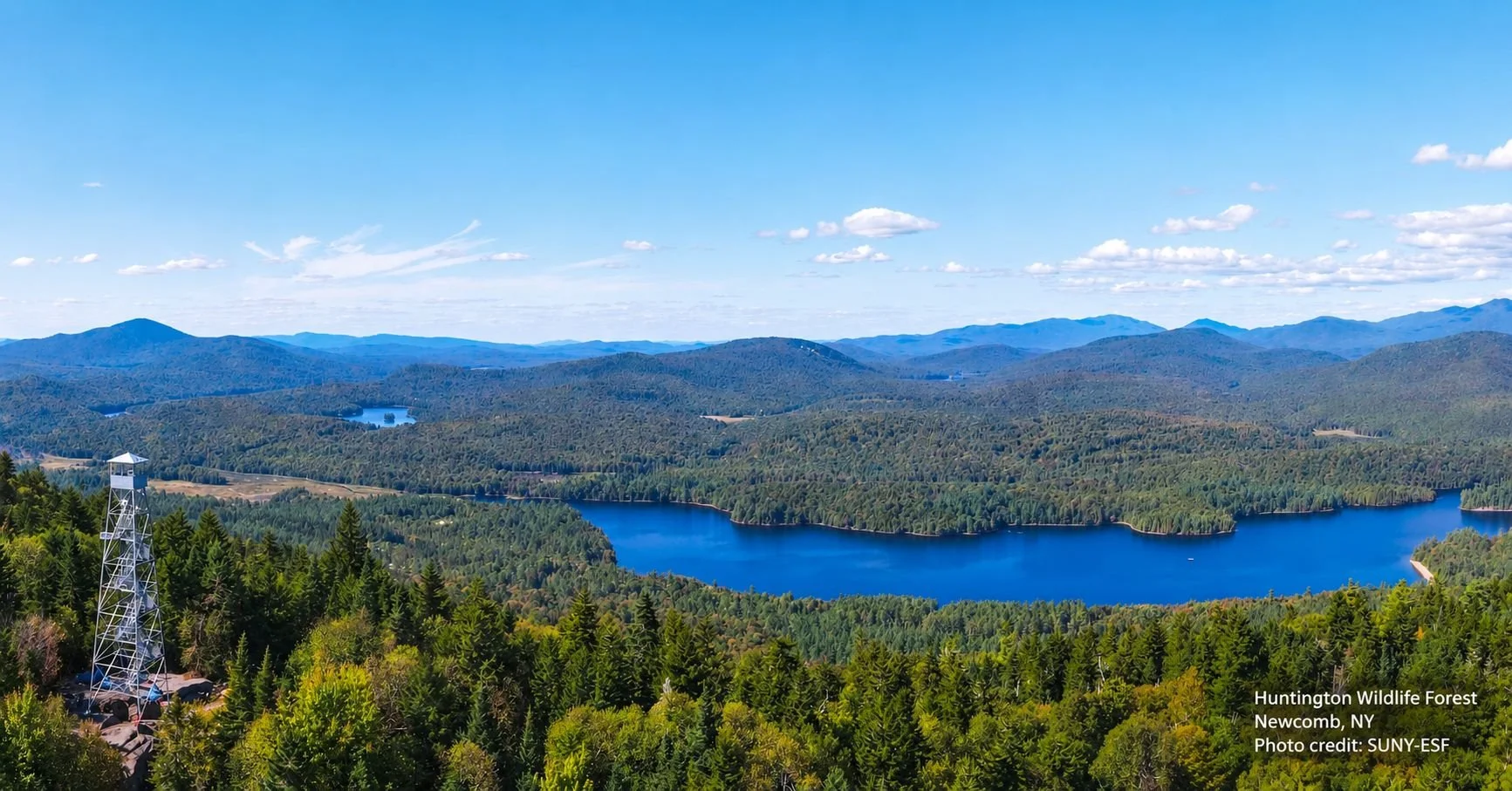
My first experience with billionaire-scale philanthropy was in the Adirondack Mountains. Anna and Archer Huntington donated their 15,000-acre great camp to SUNY-ESF to become a wildlife research station. My dad was the director for about 20 years, and I spent my summers there.
We never met any Huntingtons. Anna and Archer had made the gift in the 1930s and had no children.
My experiences in the Adirondacks led me to Princeton, where I received a scholarship from another family with deep ties to the region. Sad ties. Their child had gotten lost in the woods. They named a scholarship in memoriam.
Every year, Princeton asked me to write a note to the donors and attend a reception in the beautiful Firestone Library. There were usually 15 students and about as many donors, but I never saw the donors of my scholarship.
My final year, when I delivered my letter to the development office, I remarked that it was too bad they never came.
“They were always there.”
Get in touch with Ben.
Not sure where to start? Tell me what you're working on.
Start a Confidential Conversation →